Why Python for Crossplane Compositions?
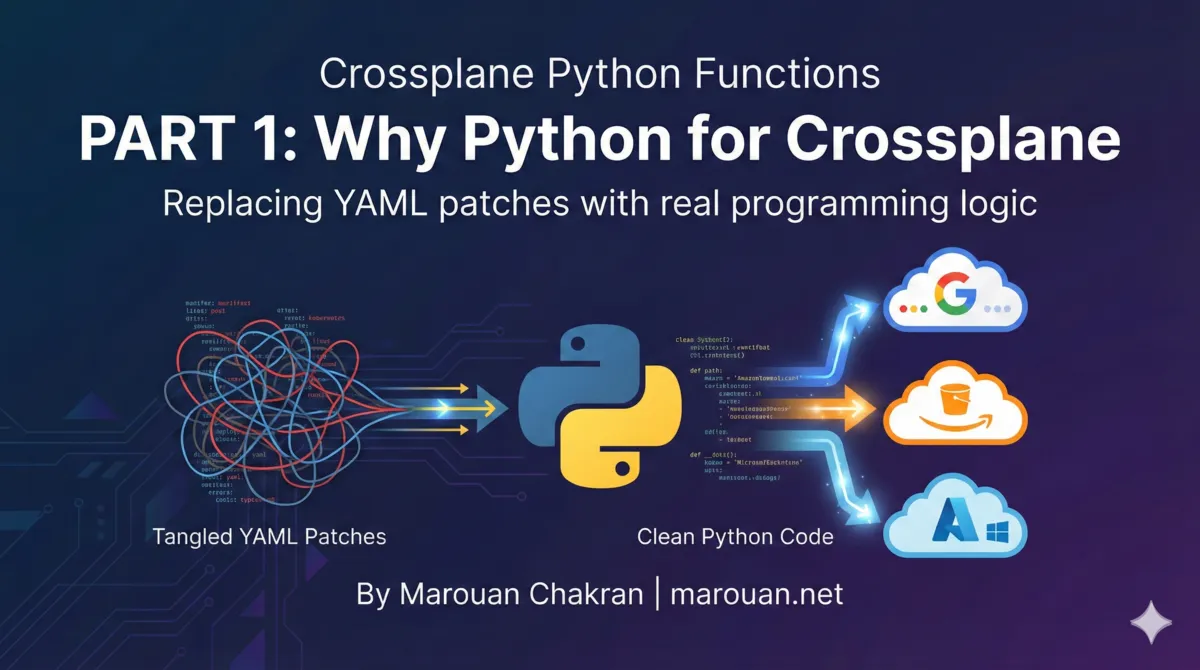
If you've worked with Crossplane, you know the feeling: your compositions start clean, then requirements multiply. Conditional logic. Cloud-specific...
Read articleA ten-part series on building production-grade Crossplane composition functions in Python.
If you've worked with Crossplane, you know the feeling: your compositions start clean, then requirements multiply. Conditional logic. Cloud-specific...
Read article
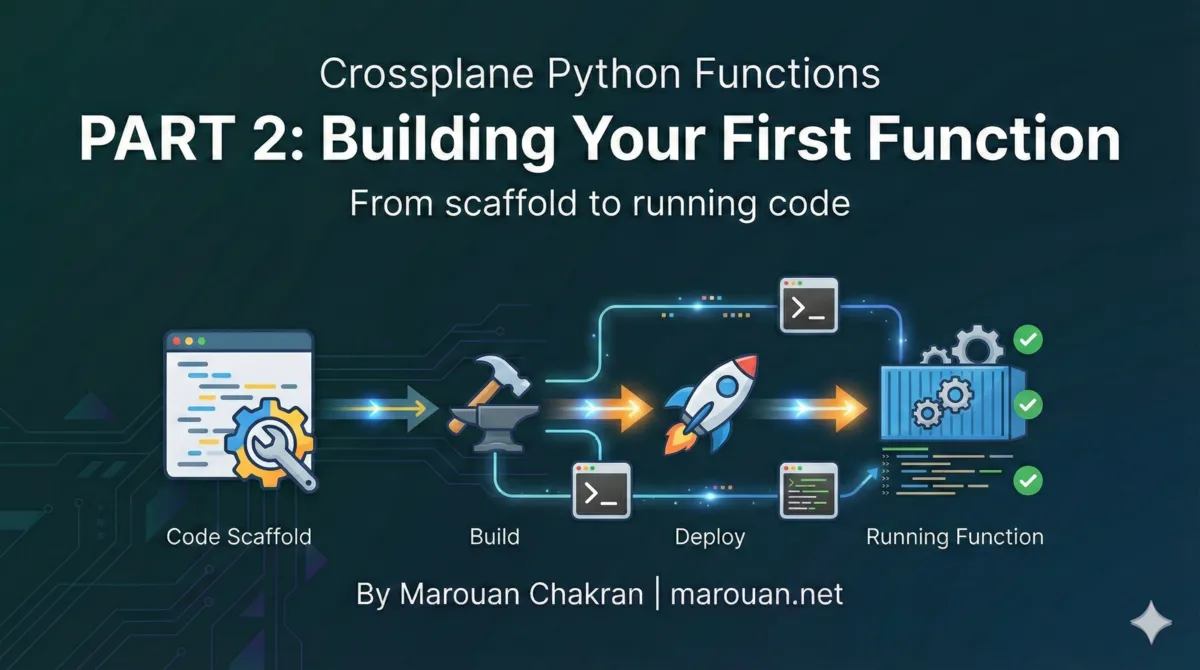
In Part 1, we discussed why Python is an excellent choice for Crossplane composition functions. Now it's time to build one.
Read article
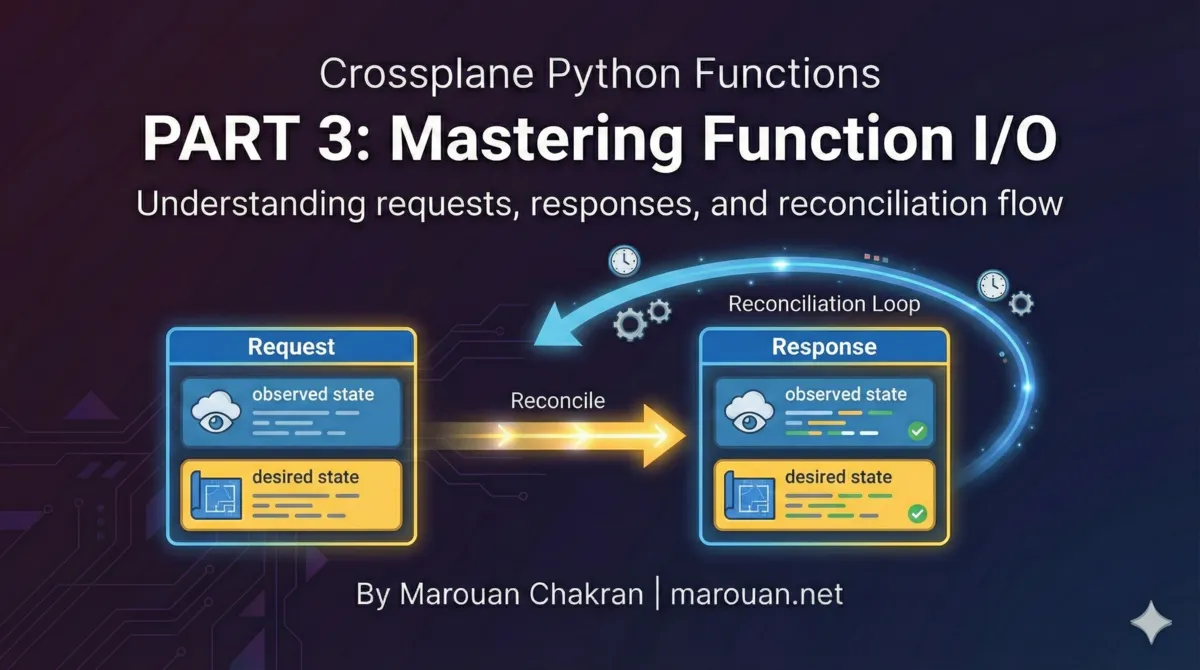
In Part 2, we built a working function but treated the request and response as black boxes. To build sophisticated compositions, you need to understand...
Read article
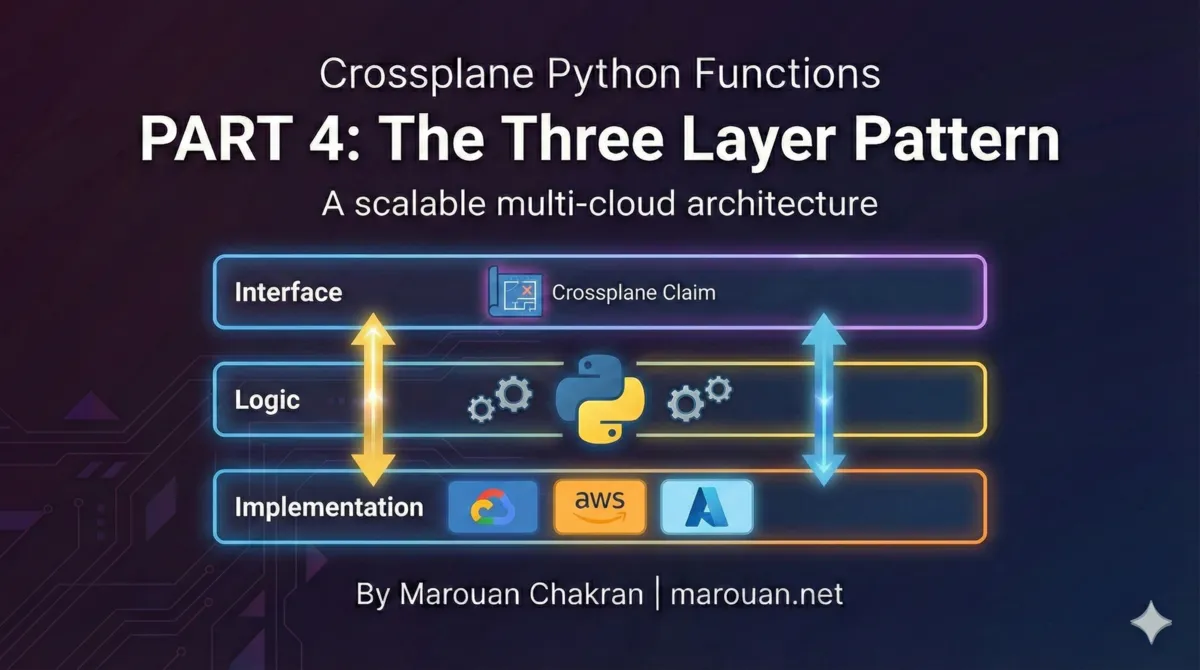
In Parts 2 and 3, we built a simple function that creates S3 buckets. But what if users need GCP Cloud Storage or Azure Blob Storage? Do we write separate...
Read article
In Part 4, we saw how adddefinition() magically finds and loads the right cloud implementation. But how does it actually work?
Read article
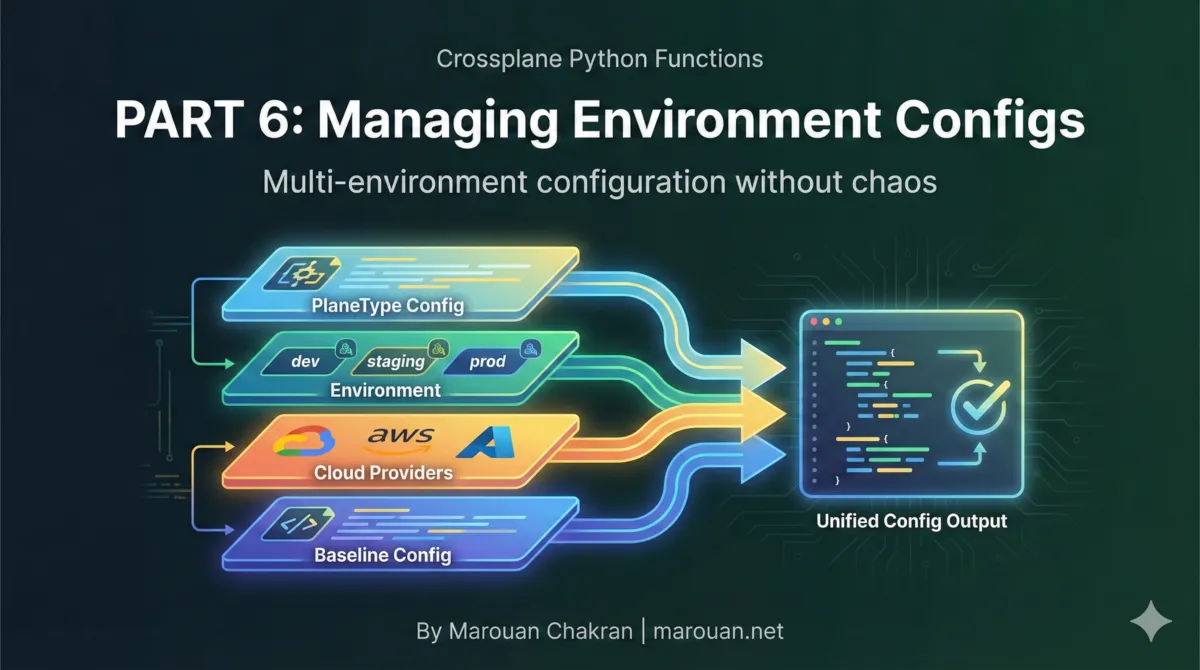
Hard-coded values don't scale. Your production cluster needs different machine types than development. Your GCP clusters need different defaults than AWS....
Read article
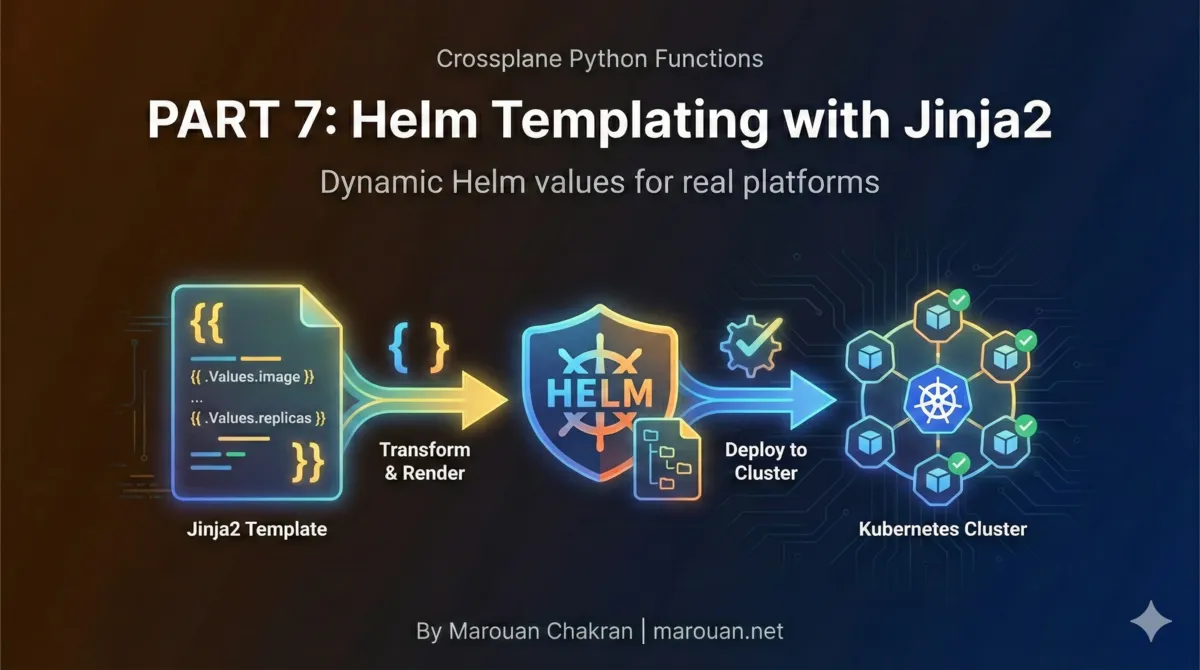
Your clusters need applications: cert-manager, ingress controllers, monitoring stacks. Crossplane's Helm provider deploys these, but Helm values often need...
Read article
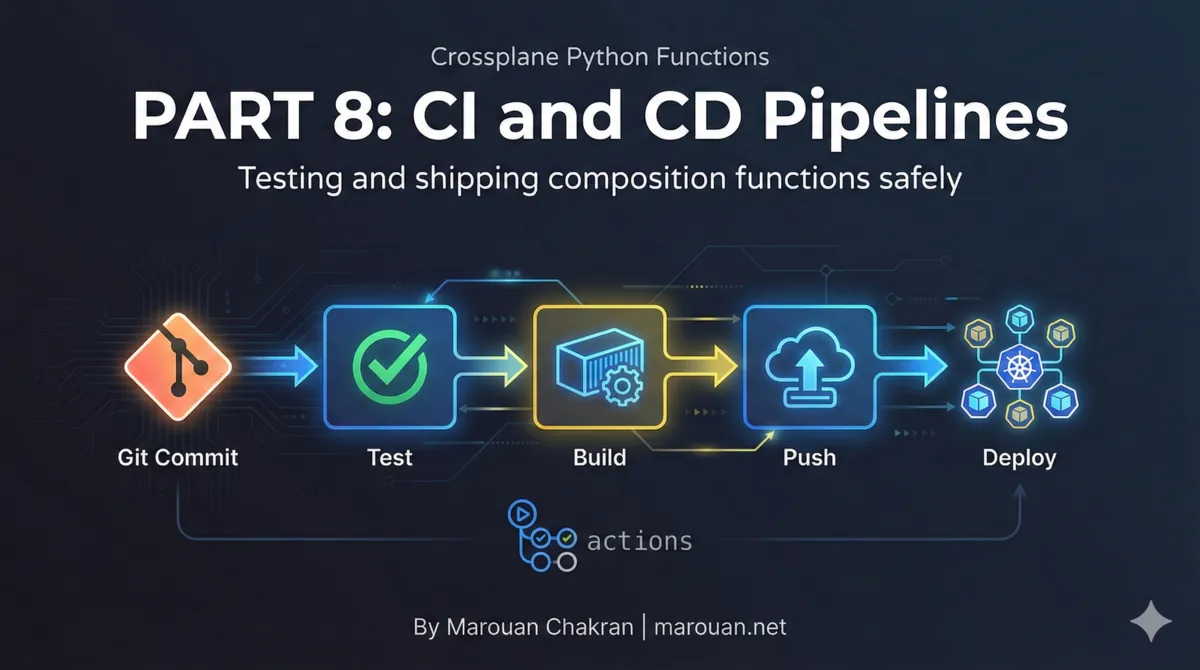
You've built a Python composition function. It works locally. Now you need to deploy it reliably—build container images, run tests, and push to registries...
Read article
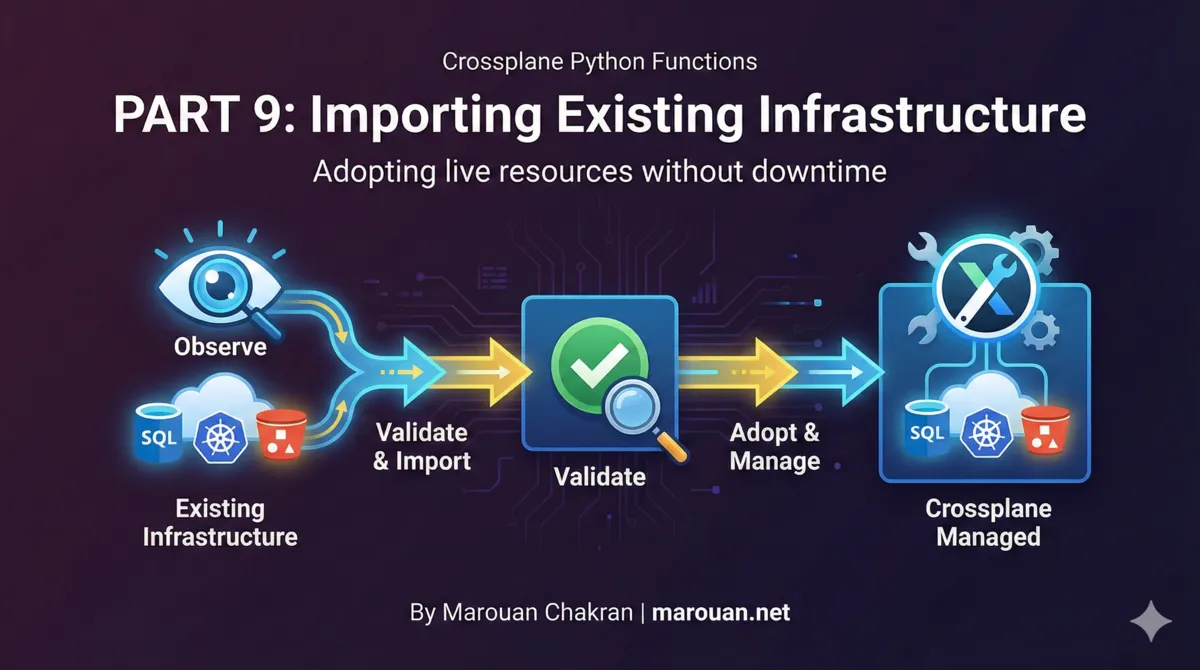
Your organization has existing cloud infrastructure. GKE clusters created by Terraform. EKS clusters from CDK. Manual resources in the console. You want to...
Read article
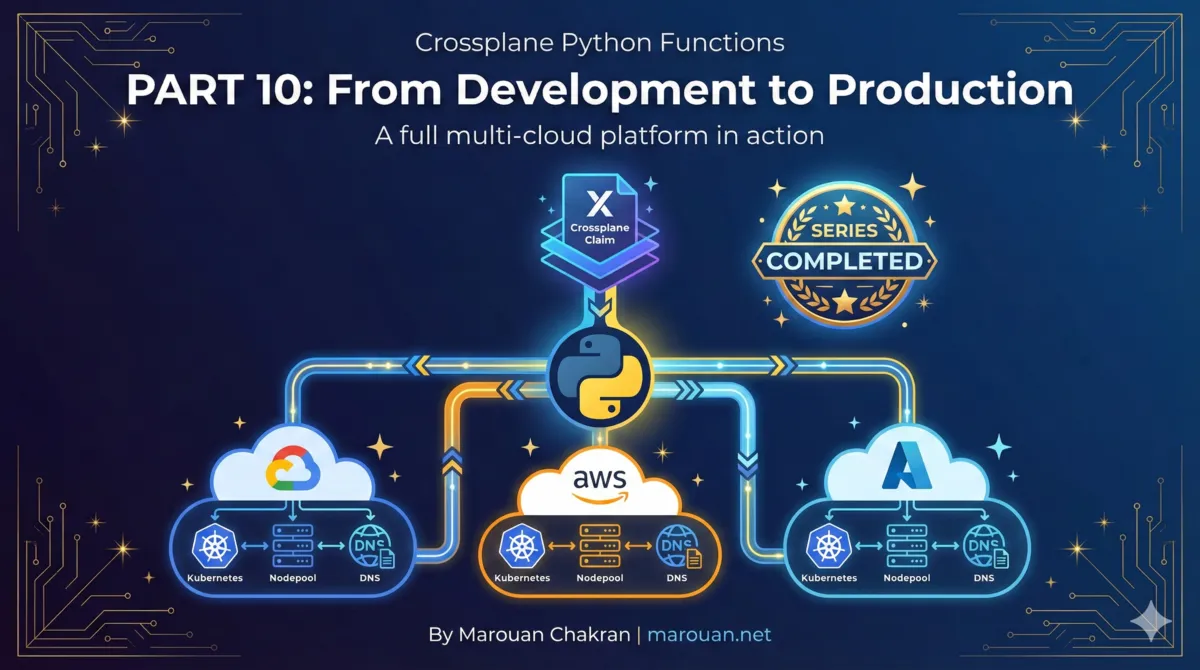
Throughout this series, we've learned individual techniques: the 3-layer pattern, dynamic provider discovery, environment configs, Jinja2 templating, CI/CD...
Read article